Zero waster of the month:
Giulio Laura
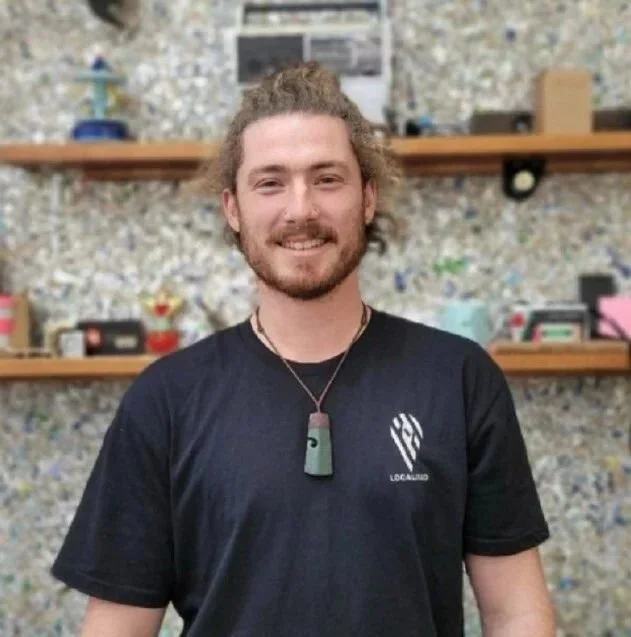
We talked to Giulio this month about his work and what keeps him motivated.
I work across the zero waste sector in Tāmaki Makaurau and wider Aotearoa. My main role is as managing the Tāmaki Zero Waste Hub in East Auckland, where we operate a community recycling centre and coordinate an inorganic redistribution service for Tāmaki Makaurau. A big part of the mahi is intercepting usable materials from what would otherwise be waste streams and getting them back into the community where they can be put to good use.
Alongside this, I’m involved at a governance and sector level as Sector Partnerships Lead and board member with the Aotearoa Plastic Pollution Alliance, and also a board member of Zero Waste Aotearoa. This allows me to contribute not only at the operational end of waste systems, but also towards broader strategy and systems change across Aotearoa.
I’m deeply interested in how context completely shifts the perceived value of materials. Much of my work sits at that intersection. Where something seen as “litter” or “waste” becomes a resource again through repair, reuse, and sometimes just a quick polish.
I also enjoy working with community groups wherever I can, whether that’s through repair cafés, creative reuse and trash art projects, or helping build more resilient local reuse networks. Ultimately, I’m interested in shifting both systems and culture towards a genuinely circular, low-waste future.
What I love most about zero waste is the value proposition of repair. On a practical level, it just makes sense economically to fix and reuse something rather than throw it away. But even more importantly, there’s a real environmental benefit in extending the life of materials and keeping them in circulation.
What I find most powerful, though, is that these two outcomes, cost savings and environmental gain naturally lead to community resilience. When people repair, share, and reuse together, it builds connection and capability.
That combination feels like a kind of perfect trifecta. The community and social sector fits into this space really naturally, and when it works well, it becomes a really beautiful partnership between people, place, and resources.
One of the best zero waste presents I’ve ever received was a handmade book. At first, I thought it was just a beautifully crafted notebook, but then I learned it was made entirely from textile waste and recycled paper.
The maker had hand-pulped used and discarded paper to create new sheets, and even incorporated textile fibres into the pulp, which gave the paper a unique texture and character.It honestly blew me away. It’s one of those gifts that are beautiful , impressive and useful!